
Neuralink Brain Chip Functionality and Future Outlook
Neuralink is a highly revolutionary project spearheaded by the entrepreneurial giant, Elon Musk. This initiative, which merges medicine and technology, has successfully captured global attention. Its fundamental goal is to provide permanent solutions for neurological diseases and disabilities by implanting an ultra-small computer chip into the human brain. It is widely believed that this technology will be capable of restoring the ability to communicate and move to paralyzed patients and, in the long term, creating a direct communication pathway between humanity and artificial intelligence (AI).
Introduction
Co-founded by Elon Musk in 2016, Neuralink is an American neurotechnology company. The company’s core mission is to develop a brain-computer interface (BCI) that establishes a direct digital communication channel between the human brain and computers. The primary reason for the intense discussion surrounding such brain chips is the technology’s potential to restore life to individuals suffering from conditions uncurable by conventional medicine, such as stroke, spinal cord injuries, and ALS. With the introduction of Neuralink technology, a new era is dawning, marked by the ability to control external devices by translating thoughts directly into digital commands, without the need for intermediate devices.
What is a brain-computer interface (BCI)?
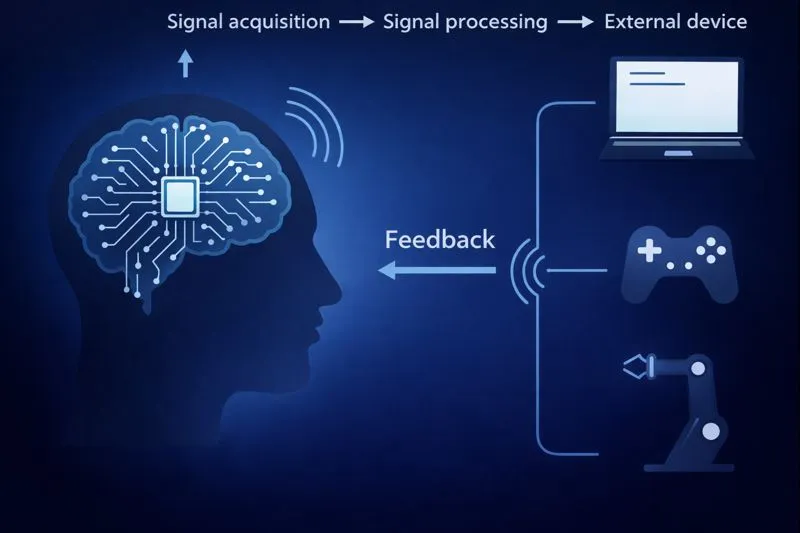
A brain-computer interface (BCI) is a technological system used to identify electrical signals generated by the brain’s neural activity and convert these signals into commands for controlling external devices, such as a computer or a robotic arm. The key feature of this technology is its ability to read the electrical patterns generated by the brain’s intention in real-time and instantly translate them into a computer command, bypassing the neural or muscular pathways typically required for speaking, writing, or performing a physical action. This allows us to control digital devices like computers using our thoughts, without relying on intermediary input devices like a keyboard or mouse.
How the human brain sends signals
Our thoughts, emotions, and movement commands are generated by nerve cells in the brain, known as neurons. These neurons communicate with each other through electrochemical impulses. When we think of performing an action, a network of neurons in specific brain regions activates, generating these electrical signals. The pattern of these signals represents our “intention” or “motor command.”
How computers read brain signals
BCI technology works by recognizing the electrical signals generated by neural activity in the brain and converting them into digital data that a computer can understand. The basic step involves measuring the electrical activity emitted by neurons using electrodes, which can be either implanted or placed on the scalp.
Subsequently, complex machine learning algorithms analyze this raw neural data to identify which computer command corresponds to a specific neural signal pattern. For instance, the system identifies the brain signal pattern corresponding to the intention to move the cursor right on a computer screen and translates it into a digital command, causing the cursor to move to the right.
What is Neuralink’s brain chip?
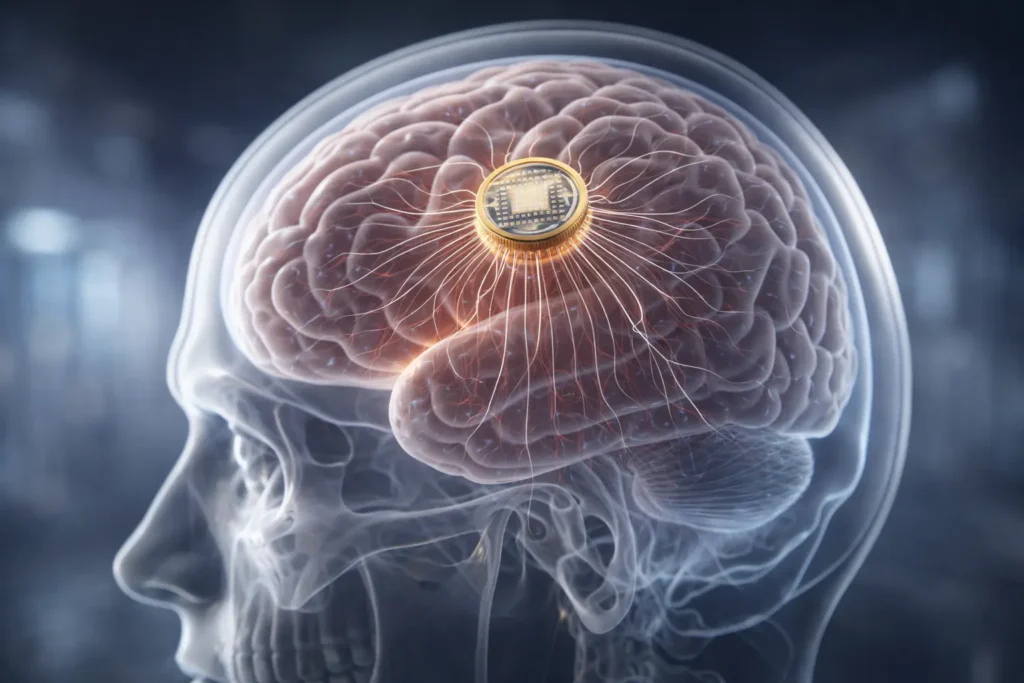
The chip developed by Neuralink was initially called “link” and is currently known as the N1 implant. This is a micro-electronic implantable device that, while appearing simple from the outside, is a sophisticated amalgamation of modern neuroscience and engineering technologies.
The purpose of the Neuralink implant
The main objective of this chip is to provide a direct interface with high bandwidth to the human brain. High bandwidth refers to the capacity to read and transmit an enormous volume of neural signals simultaneously. this capability allows Neuralink to read the user’s thoughts and intentions in real-time with significantly greater accuracy compared to existing BCI technologies.
Size, design, and placement in the brain
The N1 chip developed by Neuralink is unique in its design. The main device is about the size of a coin and is implanted directly into the skull. Thousands of extremely flexible threads, thinner than a human hair, are connected to this main chip component.
At the ends of these threads are tiny electrodes, which act as sensors that read the electrical signals emitted by the neurons in the brain. While the main chip resides in the skull, these threads are carefully inserted a few millimeters into the surface of the brain’s cortex. This placement accuracy allows the chip to read electrical signals from very close proximity to the neurons.
How Neuralink works
Neuralink’s operation is based on understanding the electrical language of the brain and translating it into digital language.
Reading brain signals with electrodes
The ultra-fine electrode threads implanted into the brain are capable of reading the micro-electrical pulses, or “spikes,” emitted by individual neurons. The primary advantage of the N1 chip is its ability to gather data from thousands of neurons at once. This is achieved by utilizing thousands of electrodes, far more than conventional BCIs. Furthermore, because these threads are extremely flexible, they can withstand the brain’s natural movements or displacements, ensuring the signal-reading process remains uninterrupted.
Translating brain signals into digital commands
The micro-electrical pulses (neural spikes) generated by the neurons are read by the chip, and this data is transmitted wirelessly to an external computer. There, advanced signal analysis algorithms developed by Neuralink analyze these neural signal patterns.
This analysis identifies the brain signals corresponding to the user’s intent for example, to move the computer cursor left or right and translates it into a digital command. Since this entire process occurs in millisecond-level time, the user gains the ability to control devices in real-time using their thoughts.
How the Neuralink chip is implanted
The process of implanting the N1 chip is a complex procedure based on modern robotic technology, unlike a conventional surgery.
Robotic brain surgery and precision
This implantation surgery is performed by a specialized surgical robot created by Neuralink itself. After creating a small opening in the skull required to fit the chip, the robot’s main task is to insert the chip’s electrode threads into the brain tissue through this opening with a level of micro-precision impossible for a human hand. The robot’s core responsibility is to place these threads in the exact location without causing any damage to the brain’s delicate blood vessels or neurons. Finally, the main body of the chip is secured flush with the natural surface of the skull bone, and the incision is fully closed with the skin.
Current use cases and human trials
As of December 2025, Neuralink’s technology is primarily focused on practically confirming its therapeutic applications in humans.
Assisting paralyzed patients with communication
The initial goal of current clinical trials is to enable paralyzed patients to control a computer or a tablet using only their thoughts. According to the preliminary results released by Neuralink, implanted patients have been successfully trained to move a cursor, type, and engage in digital communication using their thoughts. This capability will grant them the freedom to communicate again through digital media, including computers and the internet.
Initial human trials and results
Neuralink launched its first clinical trial for implanting the chip into a human brain in 2024. The primary focus of these initial tests was to confirm the safety of the implantation and the stability of the chip’s performance. The data gathered from these trials as of December 2025 is extremely important for the technology’s further development.
Technologists and scientists indicate that this early success is a crucial technological step forward that could lead to the development of future therapeutic solutions for paralysis, neurological disorders, and other diseases.
Benefits of Neuralink
The success of Neuralink is expected to open new avenues in medicine and human-technology interaction.
Restoring movement and communication
This is considered the most humanitarian benefit of the technology. For those who have lost the ability to communicate physically due to spinal cord injuries or neurological disabilities, the chip provides the capacity to instantly translate thoughts into actions or text. Ultimately, this ability will significantly enhance their quality of life and independence.
Medical applications for neurological disorders
In a long-term view, scientists believe the chip could be used to develop treatments for neurological disorders such as parkinson’s disease and epilepsy.
The principle of such treatments involves identifying abnormal electrical activity in the brain and controlling symptoms by providing targeted electrical stimulation to those areas. However, treatments for complex psychiatric diseases like depression and schizophrenia are still in the active research stage.
Risks, issues, and ethical questions
Along with the revolutionary nature of Neuralink, it raises serious medical, social, and ethical questions.
Surgical and health risks
Since implanting the chip requires brain surgery, the risks associated with any surgery such as infection, bleeding, and potential damage to brain tissue cannot be ruled out. Furthermore, long-term data on how the implanted threads interact with brain tissue over time and what happens if they degrade have yet to be confirmed.
Brain data privacy and security
Brain data, which includes thoughts, intentions, and personal memories, is considered the most sensitive data in the world. When this data is transmitted through a wireless system like Neuralink, there is a serious risk of hacking or misuse. Therefore, ensuring the privacy and security of this sensitive data is the primary legal and ethical challenge that regulatory bodies will face in the future.
Ethical questions of human enhancement
There are intense ethical debates about what will happen if this technology is used not just for medical necessity but also to enhance the natural abilities, such as memory and knowledge, of healthy individuals. Critics warn that such “bio-technical enhancements” could lead to new societal inequalities.
Future possibilities of Neuralink
Neuralink’s long-term vision is extensive, striving to push the boundaries of human capability.
Treating blindness and brain disorders
It is believed that in the future, the chip could provide artificial vision to people with visual impairments or assist parts of the brain where memory has been damaged by alzheimer’s disease. Moreover, the technology may offer the ability to digitally connect individuals with damaged sense organs directly to the brain, providing the necessary information.
Human-AI interaction and the long-term view
Elon Musk’s future vision is to integrate the human brain directly and quickly with AI to ensure the survival of the human race alongside artificial intelligence. He believes that if humans have the capacity to communicate directly with the digital world, a better balance between “man and machine” can be achieved.
Limitations and challenges
Despite the rapid advancement of the technology, Neuralink still has major technical and regulatory hurdles to overcome.
Technical and regulatory obstacles
The technology remains in an experimental phase, and numerous technical issues must be resolved before it can be scaled for widespread commercial use. Additionally, to gain final approval from government regulatory bodies like the FDA, rigorous and long-term clinical data must be presented.
Long-term safety and cost issues
A major limitation in this technological field is that the health consequences and safety of the chip’s long-term presence in the brain have not yet been confirmed.
Furthermore, due to the high costs associated with sophisticated robotic surgery and the chip technology, the service will be inaccessible to many people in the initial stages. While cost is expected to decrease as the technology matures, widespread accessibility remains a significant challenge.
Conclusion
Neuralink is a revolutionary endeavor that has the potential to change our understanding of the future of medicine and technology. It paves the way for restoring lost hope to paralyzed patients and finding innovative treatments for neurological disorders. Nevertheless, for this powerful technology to be successfully introduced into human society, it is critically important to responsibly address questions regarding data privacy, ethical boundaries, and long-term safety.