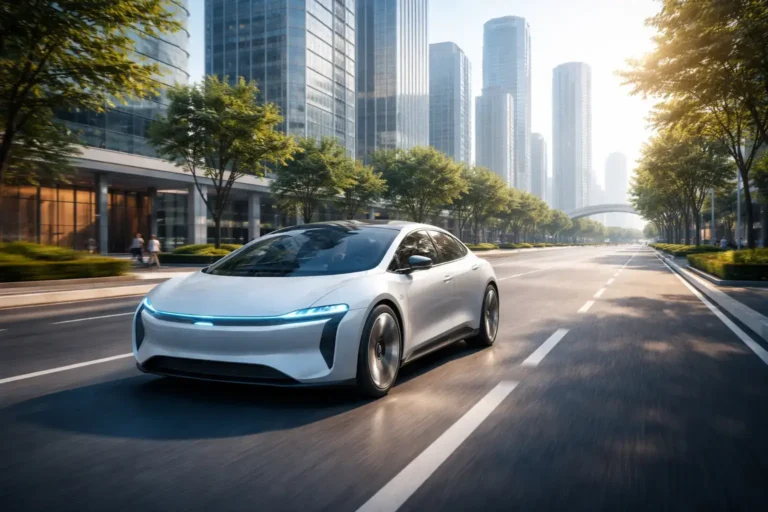
How Robotics And Automation Are Changing The Future
Today, robotics and automation are no longer confined to science fiction stories. They are spreading into every aspect of our real lives, boosting the efficiency and proficiency of global industries, and further increasing market competitiveness. As 2025 draws to a close, this technological revolution is advancing at an unprecedented pace, and it will fundamentally change the role of human labour and how the world operates. This article examines the fundamentals of robotics, its applications, benefits, and the challenges that lie ahead.
Introduction to robotics and automation
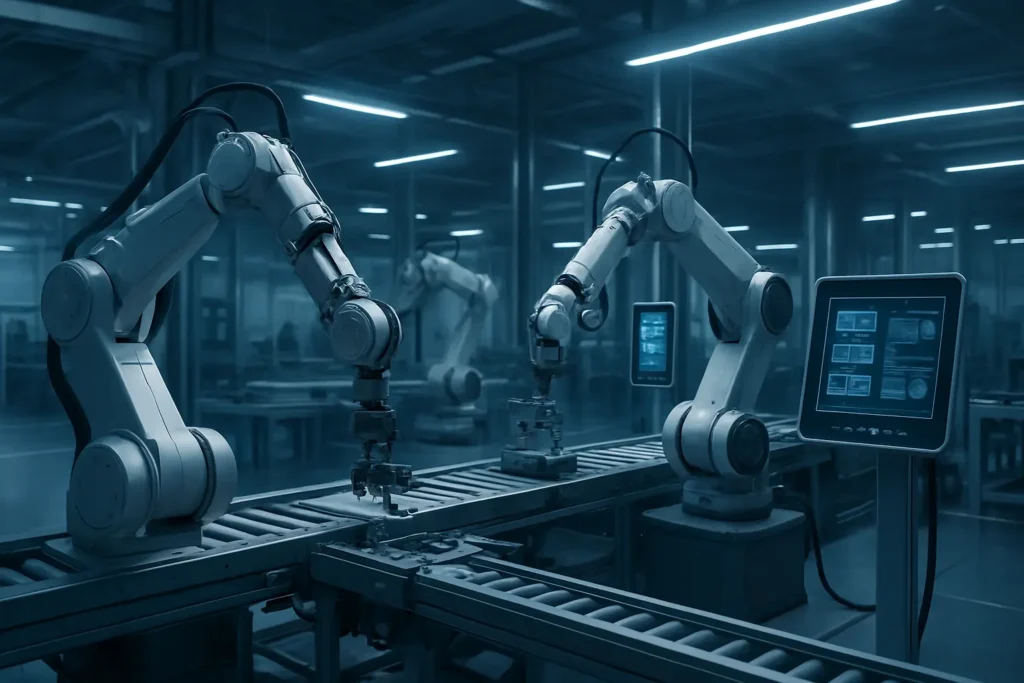
Robotics and automation are two concepts that are often linked but carry distinct meanings. Robotics primarily focuses on the design, manufacture, and operation of mechanical devices (robots) that can perform tasks in the physical world similar to humans. Automation refers to the use of technology to perform tasks without human intervention. It can range from a simple software process to the entire production line of a massive factory.
The current importance of these fields is immense. Robotics and automation have become essential for minimising risks in the global supply chain, achieving precision work free from human errors, and meeting ever-increasing production demands. By 2025, almost all the world’s leading companies are investing in these technologies to enhance the efficiency and standard of their operations.
Types of robots in use today
The types of robots currently in use vary greatly depending on the industry they are deployed in.
Industrial robots
Industrial robots are the main type of robot used in manufacturing plants. They are widely used for car manufacturing, metal welding, and heavy lifting tasks. By 2025, the newest trend for these industrial robots is collaborative robots, or cobots. They work safely in partnership with human employees, performing simple and monotonous tasks like assembly and packaging under human supervision.
Service robots
Service robots are those that assist people in public or commercial environments. This includes inventory management using automated guided vehicles (AGVs) in warehouses, providing customer service in restaurants and hotels, and transporting equipment in hospitals. Furthermore, the use of small autonomous delivery robots and drones for last-mile delivery services to homes is rapidly growing by 2025.
Medical robots
Medical robotics is a field that requires extremely high precision. Surgical robots (such as the da Vinci system, remotely controlled by a surgeon) help doctors perform operations that are too delicate and precise for the human hand. In addition, the use of disinfection robots within hospitals and robots that assist in the accurate dispensing of medicine to patients has increased significantly after the pandemic.
Personal and home robots
Personal robots are devices that simplify everyday life. Examples include autonomous vacuum cleaners, garden robots integrated with smart home systems, and simple companion robots that assist the elderly or disabled individuals.
Automation
Automation is integrated into almost every part of our personal and professional lives.
Smart devices
Smart homes have become the centre of automation. Temperature control, automatic light adjustment, and security systems are managed without human intervention. In addition to smart homes, office automation uses software to automatically handle monotonous tasks such as data entry, email management, and the preparation of reports like financial reports.
Automated manufacturing
In modern manufacturing, the entire process, from the start of production to the quality inspection of the finished product, has become automated. By using artificial intelligence (AI) for quality inspection, even minute defects invisible to the human eye can be detected, and production accuracy has increased to an unprecedented level.
Retail and warehouse automation
Large warehouses have become fully automated. Robots accurately track inventory and quickly and efficiently transport ordered goods to the packaging areas. In retail stores, self-checkout counters and robot assistants have enhanced the customer experience.
Transportation
Automation is also transforming the transportation industry significantly. In passenger transport, robotaxi pilot projects have already begun in urban areas. Furthermore, there is a strong focus on using autonomous trucks for long-haul freight transport. Analysts predict that many commercial companies will reach level 4 (no human intervention in a limited geographical area) autonomous driving capabilities by 2026.
Key technologies behind robotics
Robots are able to act intelligently thanks to a combination of the following key technologies.
Artificial intelligence
Artificial intelligence (AI) acts as the brain of robotics. Computer vision is an essential component of AI that allows robots to recognise and interpret their surroundings. AI has given robots unprecedented decision-making capabilities and enhanced their ability to adapt to unexpected situations.
Sensors
Sensors are the eyes, ears, and touch of robots. Lidar (laser radar) and radar sensors allow robots to create a highly accurate three-dimensional map of the physical space around them.
For example, force sensors are essential for robots like cobots. Because these robots work closely with humans in a shared workspace, these sensors help the robot detect and respond to the force of an accidental touch or collision, ensuring the human worker is not harmed.
Machine learning
Machine learning is a process that allows robots to automatically learn and improve their task performance over time by analysing data such as sensor readings, speed, accuracy, and errors in task execution, without being given step-by-step instructions. This helps robots successfully navigate and operate in new situations or with unexpected obstacles for which they have not been pre-trained.
Robotics hardware
‘Robotics hardware’ refers to the parts essential for a robot’s physical existence and movement. For example, actuators are the group of motors and mechanisms used to move parts like a robot’s arms and grippers. The increased precision of these motors and mechanisms has enabled robots to handle objects with greater delicacy.
How robotics is changing industries

Manufacturing
Robots have dramatically increased the consistency and precision in the manufacturing industry. The complex assembly of parts that previously took humans hours can now be completed flawlessly by robots in a matter of minutes. Moreover, the use of cobots has enabled small and medium-sized businesses to also reap the benefits of automation.
Healthcare
In the healthcare sector, robots contribute to diagnostics, accelerating laboratory analysis, and accurately transporting medicines from drug storage to patient wards or operating rooms. The use of companion robots for elderly care assists in maintaining personal safety and social connections.
Agriculture
Robotics has created a revolution in precision farming. Autonomous tractors and harvesting robots tirelessly harvest large areas. Additionally, the use of robots that identify weeds and precisely target them with the necessary chemicals has significantly reduced herbicide usage.
Retail and delivery
In retail, robots monitor inventory on shelves, gathering information about low-stock and misplaced items. Furthermore, the use of drones and small autonomous vehicles to automate last-mile deliveries to the customer can reduce delivery costs and time.
Construction
In the construction sector, robotics is used for bricklaying, pouring cement, and heavy lifting. This increases the safety of human labourers while boosting the speed and accuracy of construction projects.
Benefits of robotics and automation
The benefits that robotics and automation bring to industries are diverse.
First, they accelerate production. Robots do not need breaks and can work continuously day and night, significantly reducing the total production time. Second, they provide high precision. In the production of electronic or medical devices that require micro-level precision, the performance of robots is superior to that of humans. Third, using robots in hazardous jobs greatly reduces the harm and risk to human lives. Deploying robots instead of humans in dangerous environments such as chemical factories, nuclear facilities, or mines ensures worker safety. Finally, although the initial investment cost is high, in the long term, robots offer a high return on investment (ROI) by reducing costs such as salaries and allowances for human labour.
Challenges and limitations
Along with this technological advancement, several challenges and limitations have emerged.
The main challenge is the high initial cost. Purchasing, installing, and programming robots and automated systems requires significant upfront capital. Second, job-related issues have arisen. The risk of job displacement in manufacturing and assembly due to the use of robots has created uncertainty within the workforce, making upskilling current employees essential. Third, ethical and safety questions have emerged. For example, legal and ethical questions, such as who should be held responsible when an autonomous vehicle causes an accident, are yet to be resolved. Finally, as a technical limitation, in constantly changing environments, robots still struggle to analyse and respond to new data as quickly and efficiently as humans can.
The future of robotics (2026 and beyond)
Analysts believe that the future of robotics in 2026 and beyond will be extremely exciting.
The main trend is the further development of human-AI collaboration. Humans will focus on complex decision-making, while robots will assist with data processing and physical tasks, working together more efficiently. Second, the use of truly autonomous robots will increase. They will operate by making their own decisions without relying on GPS or an internet connection. Third, the advancement of AI-powered laboratory robots, such as robochemists, will accelerate. These robots will autonomously conduct thousands of experiments per day, speeding up the drug discovery process like never before. Finally, smart cities supported by automation will emerge. Waste management, traffic flow, and urban logistics will all be efficiently controlled by automated systems.
Conclusion
It is clear that robotics and automation are more than just tools for increasing efficiency. They have set new standards for precision, speed, and human safety. Looking from the end of 2025, the advancement of these technologies has greatly transformed our global economy and social structure. The role of these technologies in shaping the future is immense, and a new era will dawn through the integration of human ingenuity and machine efficiency.