
Artemis III Lunar Landing Mission
Since the apollo 17 mission in 1972, humanity has not set foot on the moon. however, the artemis iii mission is now setting the foundation to mark a new era in global space exploration and pave the way for humanity’s future on mars. the primary objective of this mission is to carry astronauts to the lunar south pole, a region of the moon that remains completely unexplored. artemis iii is a critical step in the broader plan to establish a permanent human presence on the moon, which will serve as a launchpad for future crewed space travel heading to mars and beyond.

The artemis program and the historical significance of artemis III
Nasa’s artemis program is a comprehensive strategic initiative to return humans to the moon, establish a sustained human presence on the lunar surface, and ultimately travel to mars. the artemis program began with artemis i (a successfully completed uncrewed flight). this is followed by artemis ii (a crewed lunar flyby), which is essential for the success of artemis iii. the artemis iii mission is a historic milestone in this program, as it will be the first time human feet touch the lunar surface in over 50 years.
Strategic and scientific objectives of lunar exploration
Returning to the moon opens new frontiers in space travel while offering numerous profound scientific and strategic advantages. as the moon is the closest space object to earth, it provides an ideal platform for testing the technologies required for missions beyond lunar orbit. furthermore, establishing a permanent base on the moon lays the groundwork for acquiring essential resources and rocket fuel needed for travel to mars and beyond. research conducted on the moon is also likely to reveal critical information regarding the history of the solar system.
Key details and crew of the artemis III mission
Artemis iii is the second crewed artemis mission, and its main objective is to land humans on the lunar surface to explore the south polar region. this mission will begin with a four-person crew, of whom two are scheduled to descend to the moon.
Scientific goals of south polar exploration
Artemis iii has several primary objectives. firstly, the main goal is to land humans on the lunar surface for the first time since 1972 and explore the unique environment of the south pole. secondly, collecting samples of the suspected water ice and other volatile compounds in that region is of immense scientific importance. thirdly, the performance of the next-generation spacesuits and landing systems will be tested in a real lunar environment.
Mission duration and key phases
The artemis iii mission is expected to last approximately 30 days. four astronauts will reach lunar orbit via the orion spacecraft, launched by the space launch system (SLS) rocket. in orbit, they will rendezvous with the SpaceX starship human landing system (HLS) vehicle. two astronauts will transfer to the HLS and descend to the moon. after spending several days (approaching a week) on the lunar surface, they will return via the HLS to orion, and the key phases will conclude with the orion spacecraft’s safe return to earth.
Spacecraft and technologies used in artemis III
The success of the artemis iii mission depends on three complex technological systems. the peak performance and safety of these three interconnected systems must be ensured at all times.
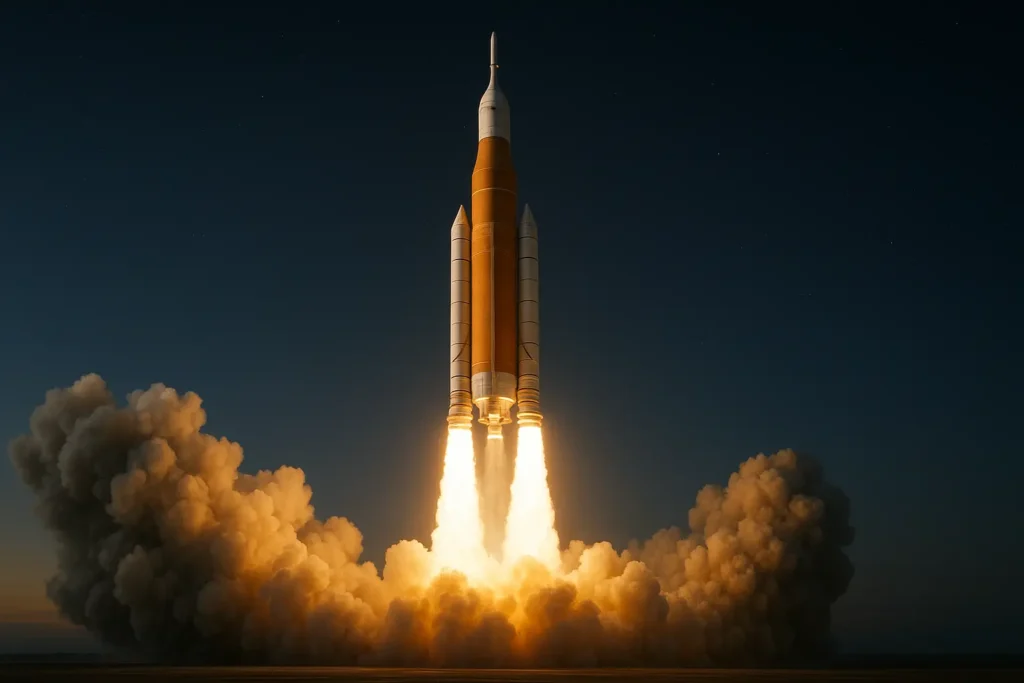
Space launch system (SLS) rocket
The sls (space launch system) rocket is nasa’s most powerful rocket to date, and it will transport the orion spacecraft and crew from earth orbit to lunar orbit. the immense thrust of the sls rocket provides a critical capability for the artemis program by allowing large payloads to be sent into deep space.
Orion spacecraft and crew module
the orion spacecraft is the crew’s transport vehicle from earth to lunar orbit, providing life support (oxygen, water, pressure control) and essential communication facilities. furthermore, the vehicle ensures complete radiation protection for the astronauts while in lunar orbit. while exploration takes place on the moon, the other two crew members will remain in lunar orbit inside the orion spacecraft.
SpaceX human landing system starship
An adapted variant of spacex’s starship vehicle (a rocket originally designed for travel to mars) will be used as the human landing system (HLS) for the artemis iii mission. this massive vehicle will transport two astronauts from lunar orbit to the south pole and back to orion. due to the starship’s size, it can carry a larger amount of scientific equipment and supplies compared to the apollo-era lunar landers.
Axiom next-generation lunar spacesuits
A next-generation spacesuit, named the AxEMU (axiom extravehicular mobility unit), has been developed by Axiom space for use on the lunar surface. these suits have been enhanced to operate in the extremely cold and dark conditions of the south pole and are designed to provide greater flexibility and freedom of movement than the apollo-era suits.
Scientific importance of the moon’s south pole
There are major scientific reasons for targeting the south pole in the artemis iii mission. this region is believed to hold future resources that will be critical for life on earth.

Water ice presence and future resource potential
the presence of water ice at the south pole carries the greatest scientific significance. obtaining samples of this ice can reveal important information about the early history of the moon and the solar system. furthermore, there is a broad expectation that this water can be used in the future as drinking water and oxygen, as well as rocket propellant by splitting the water molecules. this lays the groundwork for in-situ resource utilization (ISRU)—using resources available on the moon to prepare for future missions.
Permanently shadowed regions and illumination conditions
The interiors of certain craters at the south pole exist as permanently shadowed regions (PSRs). these psrs never receive sunlight, making them extremely cold, and they contain water-ice compounds that are billions of years old. these areas act as cold traps, condensing and trapping any material that vaporizes. in the mission, astronauts will land near these shadowed regions and attempt to collect samples from them.
Planned scientific experiments for artemis III
During the time artemis iii astronauts spend on the lunar surface, they are scheduled to conduct several high-priority scientific experiments planned by nasa.
Geology and sample collection
The astronauts’ primary focus will be on field geology and the collection of regolith samples. a significant quantity of soil and rock samples from the south polar terrain is planned to be returned to earth. these samples can provide information about the moon’s origin and its resources.
Scientific instrument deployment and data collection
In addition to collecting samples, astronauts will deploy various instruments on the lunar surface. these include modern seismometers to study the moon’s internal structure and instruments that will collect data on the lunar surface environment, lunar dust, and radiation levels. the data gathered by these instruments will be essential for establishing permanent bases on the moon in the future.
Astronaut training and mission readiness
the astronauts selected for artemis iii will receive extensive training for the extremely complex and unique challenges they will face. this training is significantly different from the training for the apollo era.
Eva lunar walk training and suit testing
Astronauts will undergo rigorous training for extravehicular activity (EVA) or walking on the lunar surface. this training is conducted using Axiom AxEMU spacesuits in extreme environments on earth, such as antarctica, and in large water tanks to simulate lunar gravity. methods for sample collection and the flexibility of the suits are tested during this time.
Spacecraft simulation and emergency training
The crew will receive extensive simulation training for both the orion and starship hls vehicles. this includes procedures for transferring between the two vehicles, landing control of the starship HLS, and managing communication delays. special attention is paid to developing the ability to make independent decisions during emergencies.
Role of spacex and starship development progress
Spacex’s contribution is extremely important to the success of the artemis iii mission. they play the main role in developing and deploying the starship human landing system (HLS) vehicle.
Starship lunar testing requirements
Before the starship hls vehicle can fly to the moon with humans, it must meet several performance and safety requirements stipulated by nasa. this includes flight tests and safety validations of the vehicle’s various subsystems.
In-space refueling and technical challenges
The biggest technical challenge for the artemis iii mission is in-space refueling technology. the starship hls cannot carry the required amount of fuel for the lunar journey directly from earth. instead, it must be refueled in earth orbit via multiple propellant tanker flights. this complex process has not yet been practically verified.
Reasons for mission delays and technical challenges
Artemis iii was initially planned for 2024, but it has been delayed several times due to complex technological development and testing work.
Direct impact of the artemis II mission delay
Artemis ii, the predecessor to artemis iii, has also been delayed due to technical testing and certification work on the orion spacecraft. since artemis ii must be successfully completed before artemis iii can launch, this delay directly affects the artemis iii mission’s postponement.
Issues with essential hardware and suit development delays
Delays in the testing of essential hardware, such as the orion spacecraft’s heat shield and life support systems (systems controlling oxygen, water, and pressure), and delays in the development timeline for the Axiom AxEMU spacesuits have contributed to the postponement of the artemis ii launch. furthermore, the challenges of preparing the starship HLS for distant missions like the moon and mars have also impacted the planned schedule.
Latest official launch schedule
According to the current official nasa updates, the artemis iii mission is most likely to occur after 2027. the final launch date for artemis iii depends on the development progress of the starship landing system (HLS).
Safety provisions and key operational risks
Artemis iii is a high-risk mission. all technical and environmental risks have been taken into account to ensure astronaut safety.
Radiation exposure and environmental hazards
As astronauts travel beyond earth’s protective magnetic field, they face the risk of exposure to high levels of space radiation. special radiation protection systems have been installed within the orion spacecraft to guard against unexpected radiation events, such as solar flares.
Landing site risks and dust issues
Ensuring precision and safety when landing on the south pole’s irregular terrain and near permanently shadowed regions is a challenge. furthermore, there is a risk that lunar dust, which is extremely sharp, abrasive, and electrically charged, could damage the vehicles and affect the astronauts’ health.
Updated realistic timeline
Considering official nasa statements and current technological development progress, the artemis iii mission is expected to launch in mid-2027 or later. the success of the starship hls testing, particularly the in-space refueling technology, will determine whether this timeline is further delayed or remains stable.
Future vision and impact of artemis III
The success of artemis iii directly impacts the future of human space exploration. it sets the stage for future mars missions.
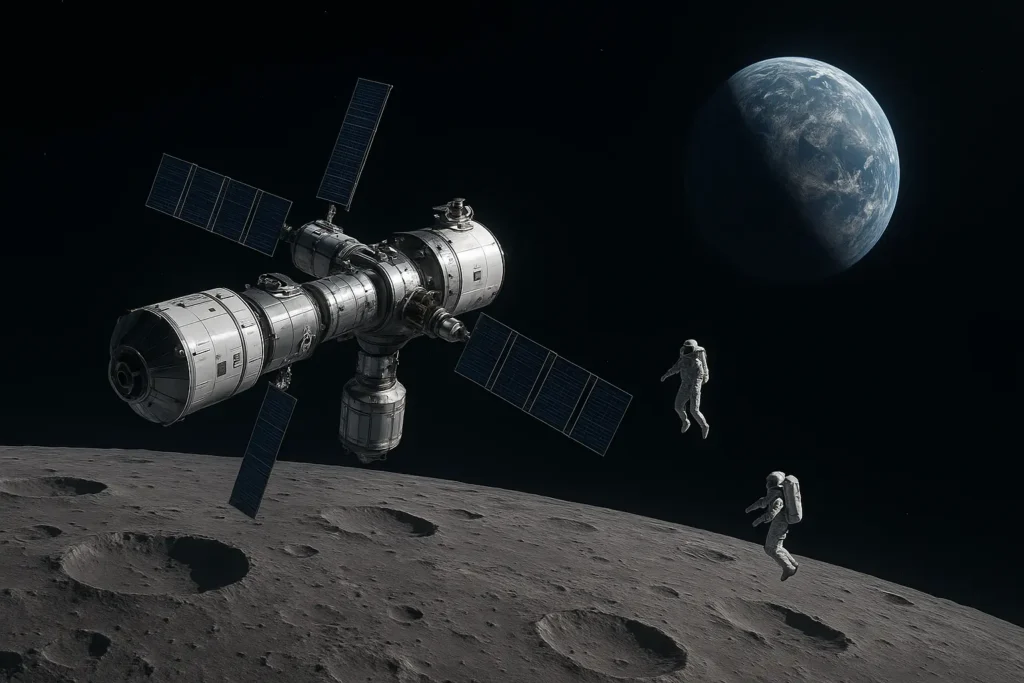
Permanent lunar bases and infrastructure
The construction of the gateway lunar orbital space station, a key component of the artemis program, is a major phase that will be implemented after artemis iii and is essential for subsequent missions. this station will provide vital infrastructure for lunar resource utilization (ISRU) and long-term accommodation for astronauts.
Gateway lunar space station
The construction of the gateway lunar orbital space station, a key component of the artemis program, will take place after artemis iii. this station will act as an intermediate point for accessing the lunar surface and returning to earth. in the future, gateway will also become the main launching point for deep space missions, such as those to mars.
The exploration roadmap from the moon to mars
If the capability to produce rocket fuel using water ice at the south pole is confirmed, the moon could be used as a refueling center for missions heading to mars. this minimizes the need to carry the fuel required for the mars journey from earth, opening a huge gateway for interplanetary travel.
Latest nasa news and current developments
According to current updates, the main components of the sls rocket and the orion spacecraft’s european service module (the main engines and life support system provided by ESA) required for the artemis iii mission are nearing completion. the assembly of this hardware is taking place at the kennedy space center in america. SpaceX is also continuously conducting test flights of the starship vehicle. however, no specific crew for artemis iii has been officially named yet, and preparations for astronaut selection are underway.
Conclusion
The artemis iii mission is more than just an exploration that returns humans to the moon. it is the technical and strategic foundation for a sustained future of human space exploration. a blend of modern technologies like SLS, Orion, Starship HLS, and AxEMU, this mission will demonstrate the value of the water-ice resources at the lunar south pole to the world. despite delays and challenges, the success of artemis iii will be a great doorway, opening up the possibility for humanity to travel between planets.